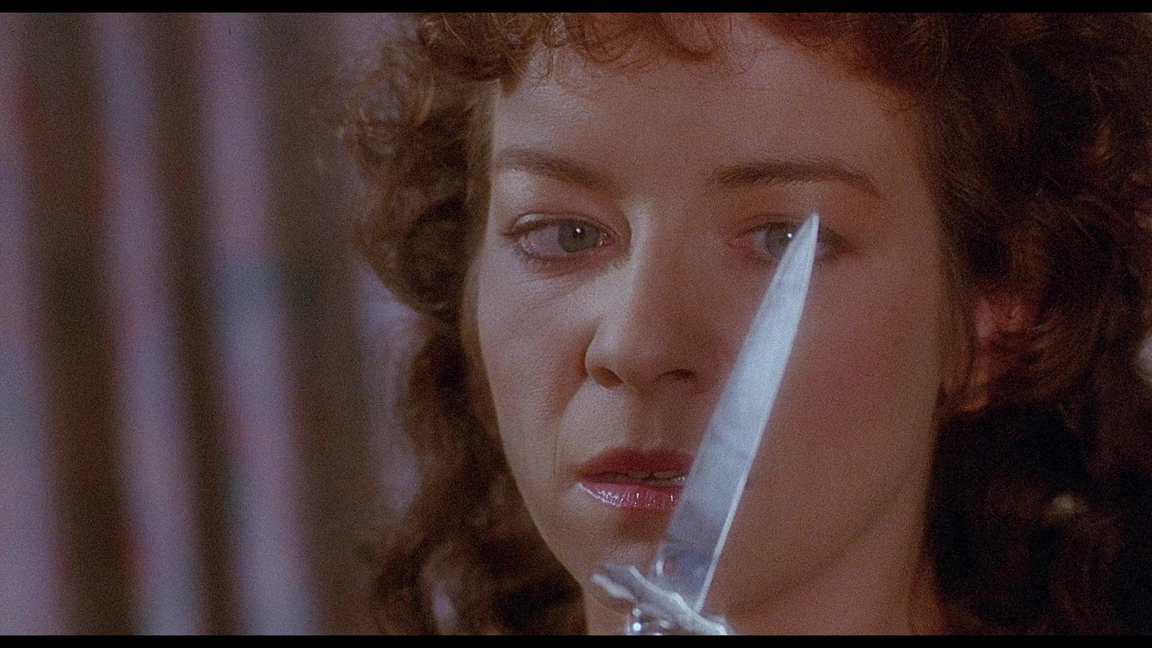
31 Days of Halloween: Reopening the Gates of Hell with 1987’s “Hellraiser

As we continue our journey through the 31 Days of Halloween, it’s time to open the puzzle box and descend into the twisted, grotesque world of “Hellraiser” (1987). Written and directed by Clive Barker, this disturbing masterpiece pushed the boundaries of 1980s horror, introducing audiences to an unforgettable combination of psychological terror, sadomasochistic horror, and grotesque body horror. Thirty-seven years later, “Hellraiser” remains a cornerstone of the genre, largely due to its haunting visuals, unique mythology, and the chilling presence of Pinhead.
The Plot: Pleasure and Pain in the Darkest Corners of Reality
“Hellraiser” begins with a seemingly simple premise but quickly evolves into something far darker. The story follows Larry Cotton and his wife Julia, who move into Larry’s family home, where they find traces of Larry’s brother, Frank, who had disappeared. Unknown to Larry, Frank had been experimenting with a mysterious puzzle box known as the Lament Configuration, which opens a portal to a dimension of extreme pleasure and pain, ruled by demonic beings called Cenobites.
When a small amount of Larry’s blood revives Frank, now a grotesque, skinless husk of his former self, Julia agrees to help him regenerate by luring victims to the house. As Frank’s restoration progresses, Larry’s daughter Kirsty uncovers the horrifying truth about her uncle, and ultimately the Cenobites themselves are summoned, led by the terrifying figure of Pinhead.
What makes “Hellraiser” unique is how it explores the twisted boundaries between pleasure and pain, and how human desires can summon forces far beyond their control. The film’s atmosphere is saturated with dread, and its gruesome visuals still haunt viewers decades later.
The Cenobites: Horror Icons from Beyond
While Pinhead (played by Doug Bradley) is now the face of the “Hellraiser” franchise, in the original film he’s simply referred to as the Lead Cenobite. The Cenobites as a collective are entities devoted to exploring the extremes of pleasure and pain, blurring the line between the two. Their grotesque, otherworldly designs—complete with hooks, chains, and mutilated flesh—created some of the most iconic imagery in 1980s horror.
Pinhead’s calm, commanding demeanor, paired with his unforgettable design—his head crisscrossed by metal pins—cements him as one of the most chilling horror villains. But unlike many slasher villains of the 80s, Pinhead doesn’t kill indiscriminately. His role is more of a punisher, fulfilling the twisted desires of those who seek him out.
Clive Barker’s Vision: A New Breed of Horror
“Hellraiser” stands apart from many horror films of the 80s, thanks largely to Clive Barker’s unique vision. Adapted from his novella “The Hellbound Heart,” Barker brings a literate, almost philosophical approach to the film, exploring human desires, moral decay, and the consequences of obsession. The themes of the film—lust, betrayal, and the consequences of seeking forbidden experiences—make “Hellraiser” as much a psychological horror as it is a visceral one.
In an era dominated by slasher films, Barker’s focus on the grotesque nature of the human body, paired with the otherworldly Cenobites, introduced a new level of complexity and terror. The film’s practical effects, particularly the grotesque body transformations and resurrection scenes, remain deeply unsettling even today.
The Legacy: Hell’s Gates Never Close
“Hellraiser” didn’t just introduce us to Pinhead and the Cenobites; it kicked off a sprawling franchise that would span numerous sequels, a reboot, and an ever-expanding mythology. While the sequels vary in quality, the original remains a standout for its bold storytelling, visceral horror, and its challenge to the viewer’s perception of pleasure and pain.
As we celebrate the 31 Days of Halloween, “Hellraiser” remains a must-watch for horror fans looking to be unnerved and disturbed. It’s a film that refuses to let you look away, dragging you into its hellish world, and reminding you that sometimes, solving the puzzle is only the beginning of the nightmare.